Ingredients
Method
- Cook the farro: combine rinsed farro with water or broth in a saucepan. Bring to a boil, reduce to a simmer, cover, and cook for 25–30 minutes until tender but still chewy. Drain any excess liquid, fluff, and allow to cool.
- While the farro cooks, preheat the oven to 400°F (200°C) and line a baking sheet with parchment paper.
- Pat the salmon dry and place it on one side of the baking sheet. Drizzle with half the olive oil, the minced garlic, dried dill, salt, and pepper. Top with a few lemon slices.
- Toss the asparagus spears with the remaining olive oil, salt, and pepper, and arrange on the other side of the baking sheet.
- Bake for 12–15 minutes, until the salmon flakes easily with a fork and the asparagus is tender with slightly crisp tips. Thicker salmon fillets may need an extra 2–3 minutes.
- Remove from the oven and squeeze fresh lemon juice over the salmon.
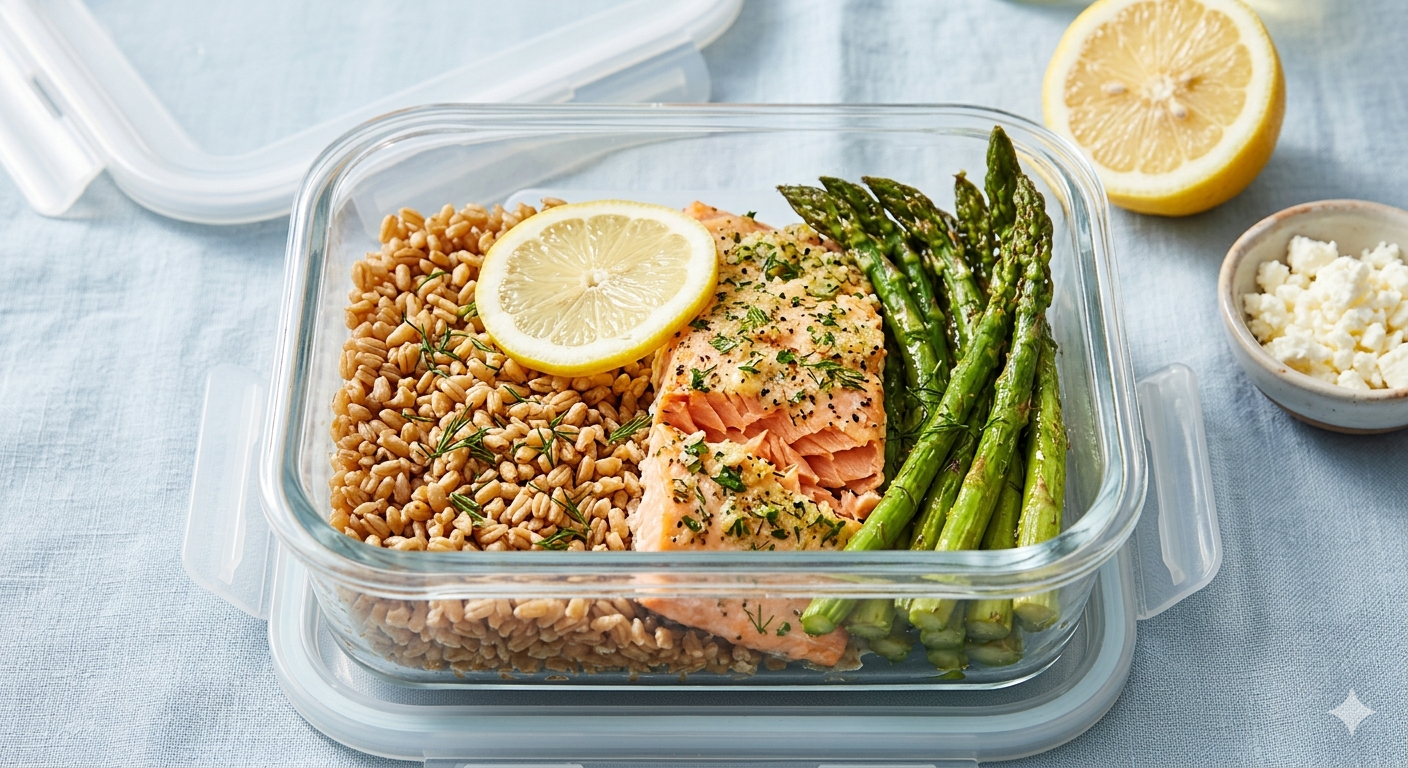
- Allow everything to cool completely before flaking the salmon into large pieces and combining with the cooled farro and asparagus in a meal prep container.
- To serve: reheat gently or enjoy cold, topped with feta or tzatziki if using.
Notes
Frozen salmon fillets remain dramatically cheaper than fresh and work identically once cooked — always check the freezer aisle first. Farro has a higher upfront cost than rice but its protein content and texture longevity make it genuinely worth it specifically for multi-day meal prep, where lesser grains tend to break down. Buying asparagus in season, typically spring, gets you the best price; outside of that window, frozen asparagus or a swap to green beans keeps the cost down without sacrificing the dish.