Ingredients
Method
- Score the duck skin in a crosshatch pattern with a sharp knife, cutting through the fat but not into the meat. This is essential for rendering the fat and achieving crispy skin.
- Season the duck generously on both sides with salt and pepper.
- Place the duck breasts skin-side down in a cold skillet — do not preheat the pan. Turn the heat to medium and let the duck cook slowly for 8–10 minutes as the fat renders out. You will see a significant amount of fat pooling in the pan — this is correct. Pour off excess fat partway through if needed.
- Once the skin is deep golden brown and very crispy, flip the duck and cook the flesh side for 3–4 minutes for medium-rare (internal temperature 135°F / 57°C) or 5 minutes for medium.
- Remove the duck from the pan and rest on a plate, loosely tented with foil, for 8 minutes — resting is non-negotiable for duck.
- Pour off most of the remaining fat from the pan, leaving just a thin coating. Add the garlic and cook for 30 seconds over medium heat.
- Add the orange juice, orange zest, chicken broth, honey, and Dijon mustard. Stir and simmer for 3–4 minutes until the sauce reduces and becomes slightly syrupy.
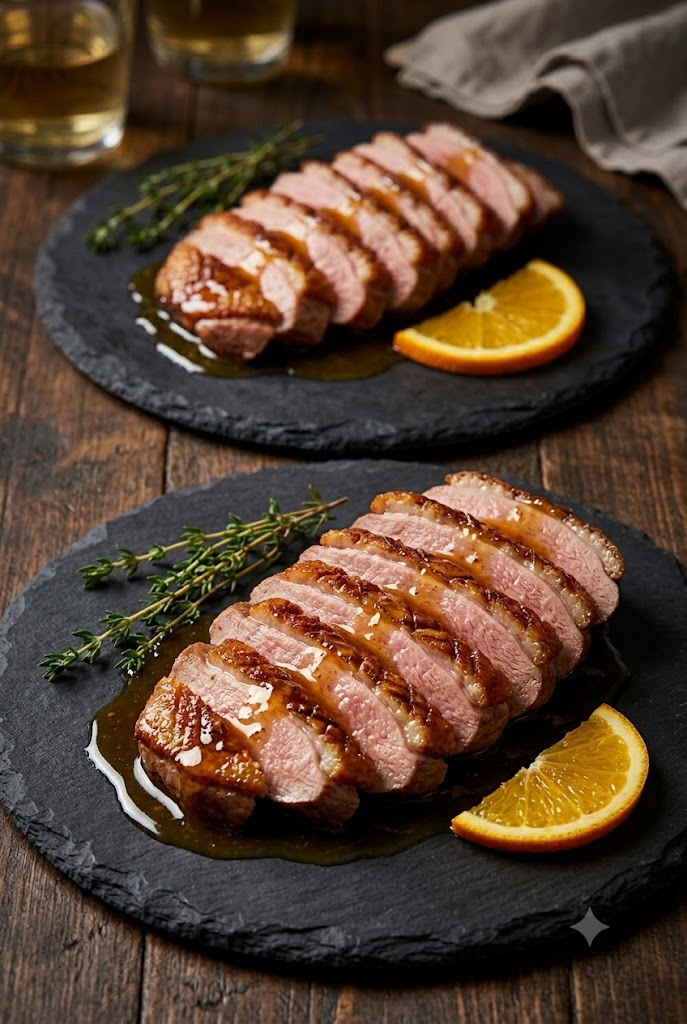
- Slice the rested duck breasts thinly on a diagonal and fan the slices on each plate. Spoon the orange sauce generously over and around the duck.
- Garnish with fresh thyme and orange slices if using.
Notes
Duck breasts are sold at many large grocery stores and wholesale clubs at prices that make them genuinely competitive with a good steak — look for them in the frozen section where they are often significantly cheaper than fresh. Starting the duck in a cold pan is the single most important technique in this recipe — it slowly renders the fat and produces crackling skin without burning. Do not skip the resting time; duck sliced too early loses its moisture instantly.